


Views: 0 Author: Site Editor Publish Time: 2026-01-27 Origin: Site


You can expect to pay between $6,000 and $20,000 for an expandable container house in the U.S. market. The shipping cost depends on the size, the features you choose, and the manufacturer. Shihang offers expandable models that provide flexible living space. Prices vary:
Bare container boxes start at $6,000.
Simple home decorations cost around $12,000.
Premium materials and finishes increase the cost.
The price per square foot for an expandable container home usually falls between $150 and $220, which is lower than many traditional container houses.
Type of Home | Cost per Sq. Ft. |
|---|---|
Traditional Container Homes | $200 - $300 |
Expandable Container Homes | $150 - $220 |
You can find a wide range of prices for an expandable container house in the U.S. market. Most homes start at about $10,000 for a small, basic model. Larger and more luxurious options can reach up to $50,000. This price range is much lower than the national median home price, which is over $300,000. If you want a flexible living space, you can save a lot compared to buying a traditional house.
National median home price: over $300,000
Expandable container house prices:
Small, basic model: as low as $10,000
Large, luxury model: up to $50,000
You can see that choosing a shipping container home gives you a more affordable way to own a home.
The cost of your container home depends on the size and model you choose. Many manufacturers, including Shihang, offer a variety of options. You can select a model that fits your needs and budget. Here is a table showing the starting prices for popular expandable container house models:
Model Name | Size | Starting Price | Bedrooms | Sleeps |
|---|---|---|---|---|
40 ft Luxury Container Home | 40 ft | $141,041 | 1 | 2-4 |
Cold Climate Container Home | N/A | $94,500 | N/A | 2-4 |
40 ft Container Duplex | 40 ft | $95,000 | 2 | 2-4 |
"The Joshua" Model | 40 ft | $90,255 | 1 | 2-4 |
"The Alpine" Model | 40 ft | $58,643 | 1 | 2 |
"The Burnet" Model | 40 ft | $118,148 | 1 | 2-4 |
"The Magnolia" Model | 40 ft | $119,803 | 1 | 2-4 |
"The Elgin" Model | 40 ft | $64,241 | 2 | 4 |
"The Cedar" Model | 40 ft | $61,608 | N/A | 2-4 |
"The Evergreen" Model | 40 ft | $64,241 | 2 | 4 |
"The Birch" Model | 40 ft | $62,047 | 1 | 2 |
"The Bluegrass" Model | 40 ft | $62,047 | 1 | 2 |
10FT/20FT/30FT/40FT Luxury Modular Prefabricated Expandable Container House | 10/20/30/40 ft | Contact Us for a Quote | N/A | N/A |
30FT and 40FT Expandable Container House | 30/40 ft | Contact Us for a Quote | N/A | N/A |
You can also compare the starting prices visually:
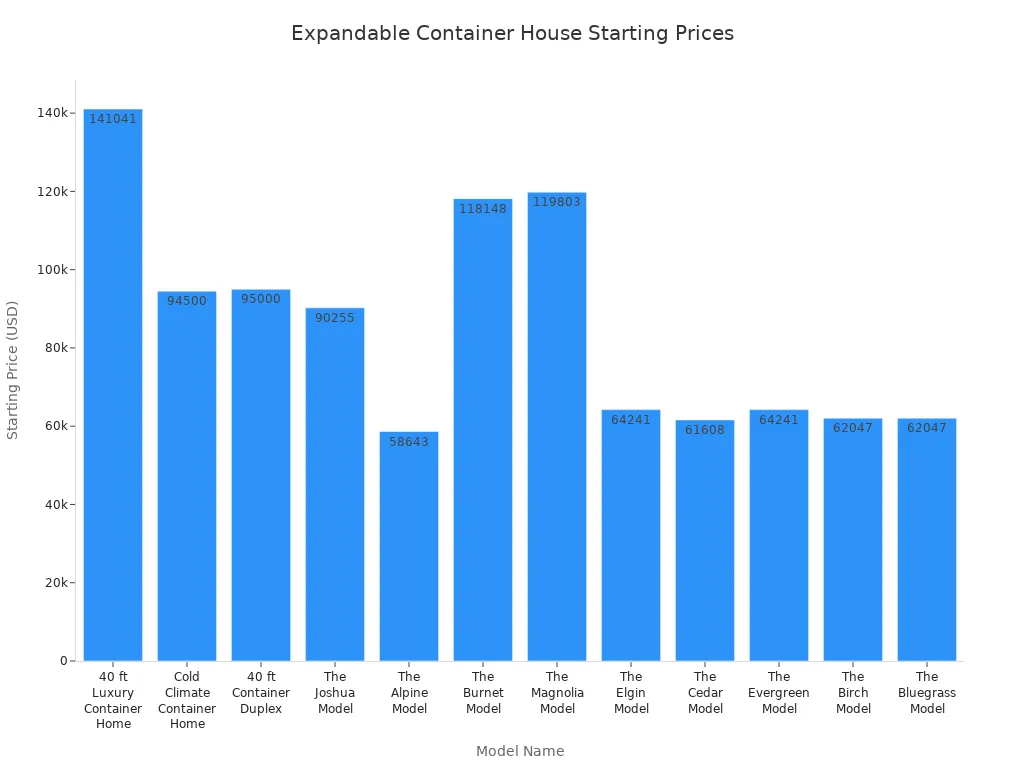
If you want a specific layout or extra features, you may need to pay more. Shihang can help you choose the right model for your needs.
When you look at the price per square foot, expandable container houses offer great value. Most traditional site-built homes cost between $150 and $300 per square foot. Expandable container houses can cost as little as $50 per square foot. This lower price makes it easier for you to afford a new home.
Housing Type | Price per Square Foot |
|---|---|
Traditional Site-Built Homes | $150 - $300 |
Expandable Container Houses | $50 |
You can see that a shipping container home gives you more space for your money. If you want to keep your container home cost low, you should compare prices by square foot before you buy.
Tip: Always check what is included in the price. Some manufacturers offer basic models, while others include more features. Ask for a detailed quote to avoid surprises.
You can use this overview to decide which expandable container house fits your budget and needs.
When you plan to buy an expandable container house, you need to understand what drives the cost. Several factors play a role in the final price you pay for your new home. Let’s break down the main elements that influence your budget.
The size and layout of your container home have a big impact on cost. A standard expandable container house with an unfolded area of 37 square meters usually costs between $9,000 and $12,000. If you want a more complex layout with bedrooms or a kitchen, you can expect the price to rise by 15% to 30%. Multi-module designs, which offer more space and flexibility, can range from $15,000 to $25,000 or more. When you choose a larger or more intricate design, you invest more in materials and labor.
The materials you select for your home matter. High-quality steel frames, insulation, and finishes increase the cost, but they also boost durability and comfort. Shihang uses composite insulation panels like rock wool and polyurethane, which provide excellent fireproofing and sound insulation. These features help your shipping container home last longer and perform better in different climates. Investing in better materials can save you money on maintenance over time.
Customization lets you create a home that fits your needs. Basic upgrades, such as improved finishes or extra windows, can add 5% to 10% to the cost. If you want advanced features like smart home technology or unique layouts, the price can rise by 20% to 30%. Shihang offers flexible options for interior layouts, doors, windows, and utilities. These upgrades make your container home more comfortable and functional.
The manufacturer’s reputation and your location also affect the cost. Established companies like Shihang provide reliable products and better customer service, which can influence pricing. The cost of land and construction varies by region. Urban areas usually have higher expenses than rural ones. When building a container home, always consider both the company’s track record and your local market conditions.
Tip: Compare quotes from different manufacturers and check what is included in the price before making your decision.
Factor | Description |
|---|---|
Location | The cost of land varies by area; urban locations are typically more expensive than rural ones. |
Size and Design | Larger houses require more materials and labor; complex designs increase costs. |
Quality of Materials | Higher quality materials cost more but can save on maintenance; lower quality may lead to higher long-term costs. |
Construction Method | DIY builds can save on labor; professional contractors may ensure better quality but at a higher cost. |
Market Conditions | Prices fluctuate based on demand and supply; economic factors also play a role in pricing. |
When you buy an expandable container house, you receive a set of essential features that make your new home comfortable and secure. Most manufacturers include the following in the base price:
Insulated walls and roof using high-density foam or rock wool for temperature control
Foldable furniture such as tables, beds, and storage units that save space
Pre-installed utilities with wiring for electricity and plumbing for kitchenettes and bathrooms
Security features like reinforced steel doors and lockable windows
Eco-friendly materials, including recyclable steel and low-VOC finishes
These features help you enjoy a modern container home that feels safe and efficient. You get a shipping container home that is ready for basic living needs.
You should know that the quoted price for a container house usually does not include delivery or installation services. You will need to arrange for transportation to your site. A crane is often required for installation, which adds to the overall cost. Some manufacturers offer delivery and setup for an extra fee. Always ask about these services before you finalize your purchase. This step ensures your home arrives safely and gets installed correctly.
Tip: Check with your supplier about delivery options and installation support. Planning ahead helps you avoid unexpected expenses.
The base price covers the main structure and standard fittings, but it does not include furniture, customizations, or upgrades. If you want extra features, such as advanced home options, luxury finishes, or smart technology, you will pay more. Additions like solar panels, upgraded insulation, or unique layouts increase the cost. You can choose upgrades to match your lifestyle and needs.
Upgrade Option | Typical Extra Cost |
|---|---|
Solar Panels | $2,000 - $5,000 |
Premium Flooring | $1,000 - $3,000 |
Smart Home Features | $1,500 - $4,000 |
Custom Layout | Varies |
You have the flexibility to design your container home, but remember to budget for these extras. Careful planning helps you manage your construction costs and build the house you want.
When you plan your shipping container home, you need to consider extra expenses beyond the base price. These costs can affect your total budget and the timeline for moving into your new house. Here are the main areas where you may spend more:
You must secure the right permits before you start construction. Local governments require permits for most building projects, including a container home. Permit fees can change based on your city or county rules. You may also need inspections during and after the build.
Site preparation is another important step. You need to clear the land, level the ground, and lay a foundation for your house. Site prep costs usually range from $2,000 to $10,000. The price depends on the size of your lot and the type of foundation you choose. You may also pay for shipping and installation if your site is far from the manufacturer.
Tip: Check with your local building office early. This helps you avoid delays and unexpected costs.
Connecting your home to water, sewer, and electricity adds to your total cost. Utility hookup fees can vary by location and the distance from main lines. Here is a table showing typical costs for utility connections:
Utility Type | Cost Range |
|---|---|
Water hookup | $2,000 - $5,000 |
Sewer connection | $5,000 - $10,000 |
You may also need to pay for electrical connections and internet service. These costs make sure your container home is comfortable and ready for daily life.
Many buyers want to add special features to their shipping container home. Custom upgrades can include eco-friendly options like solar panels, water filtration, or composting toilets. These upgrades usually cost between $3,000 and $7,000. You can also choose luxury finishes or smart home technology for a higher price.
Eco upgrades: $3,000–$7,000 (solar panels, water filtration, composting toilets)
Luxury finishes: Price varies by material and design
Smart home features: Price depends on the system you select
You can design your house to fit your lifestyle, but remember to include these upgrades in your budget.
Note: Planning for these extra expenses helps you avoid surprises and keeps your shipping container home project on track.
You can save a significant amount of money by choosing an expandable container house instead of a traditional home. Expandable container houses use repurposed materials and streamlined construction, which makes them more affordable. Traditional homes often cost more because of expensive materials, labor, and ongoing maintenance. The table below shows a clear comparison:
Type of Home | Cost Comparison |
|---|---|
Expandable Container | Generally more affordable due to repurposed materials and streamlined construction processes. |
Traditional Homes | Often more expensive due to higher material and labor costs, along with ongoing maintenance expenses. |
If you want an affordable second home or a tiny house, an expandable container house gives you a practical solution.
When you compare a container home to other prefab options, you notice several cost advantages. Expandable container homes require less land, which lowers acquisition costs. Prefabricated components reduce labor and material expenses. Lightweight materials in shipping container homes cost less and need less maintenance. Construction is faster and less labor-intensive, so you save money. Energy-efficient designs help you spend less on utilities and maintenance over time.
Land acquisition costs are lower for expandable container homes.
Prefabricated components reduce construction costs.
Lightweight materials cost less and require less maintenance.
Labor costs are lower because construction is faster.
Energy-efficient designs help you save on utility bills.
You can manage your budget and save money by following a few simple strategies. First, determine how much living space you need and calculate the number of shipping containers and features required. Compare quotes from different manufacturers to find the best value. Negotiate for volume discounts and custom features. Look for local suppliers with competitive prices to take advantage of regional savings.
Tip: Estimate your total budget by considering these important factors:
Desired living space
Design and layout
Local building codes and regulations
Structural modifications
All associated costs beyond just the containers
Careful planning helps you build an affordable home that fits your needs. You can enjoy your new shipping container home without overspending.
You can expect the cost of an expandable container house to start around $20,000 for basic models. Custom features, such as solar panels or luxury finishes, may raise the price to $50,000 or more. When you plan your home, remember to include all expenses. These can add up quickly:
Site preparation often adds 10-20% to your total cost.
Utilities like plumbing and electrical wiring may cost $5,000 to $15,000.
Labor can take up 30-50% of your budget.
You should use budgeting tips to avoid surprises. For accurate quotes and options, consult reputable manufacturers like Shihang
You can set up most expandable container houses in less than one hour. Shihang models often need only four people and basic equipment for quick installation.
You can choose custom layouts, including partition walls, doors, and windows. Shihang offers flexible options to match your needs.
Most models include basic electrical wiring and plumbing for kitchens and bathrooms. You may need to arrange utility connections on-site.
You can use expandable container houses in cold climates. Insulated walls and roofs help keep your home warm. Shihang uses high-quality insulation materials.
You usually need a building permit before installing your container house. Check local regulations and contact your city or county office for details.


