


Views: 0 Author: Site Editor Publish Time: 2026-07-31 Origin: Site


Purchasing a shipping container represents a significant capital expense for your business. Its structural integrity directly dictates the safety of your valuable cargo. It also determines the ultimate success of any architectural conversion project you plan. Subpar manufacturing inevitably leads to premature rusting. It causes failed maritime inspections and dangerous structural compromises.
Buyers simply cannot afford to assess asset quality based on surface appearance alone. A fresh coat of paint easily hides substandard steel and weak welds. You need a deeper understanding of how factories build these units to make informed purchasing decisions.
Understanding the factory floor process provides a concrete framework for evaluating suppliers. We will guide you from initial raw material selection to final compliance testing. You will learn exactly how to inspect manufacturing standards. This knowledge ensures asset longevity and protects your investment.
Material Matters: Authentic shipping containers rely on Corten (weathering) steel and marine-grade plywood or bamboo flooring; substitutes severely impact lifespan.
Process Predicts Quality: The integrity of a unit depends heavily on automated, continuous welding and precise paint micron thickness.
Compliance is Mandatory: A finished container holds no maritime value without strict adherence to ISO dimensions and the issuance of a valid CSC (Convention for Safe Containers) plate.
Procurement Strategy: Standard production runs offer predictable timelines, while custom factory modifications require factoring in extended lead times and specialized QA checks.
Manufacturers do not build true marine-grade assets from basic materials. They rely on highly specialized components designed to withstand severe oceanic environments. Understanding these materials helps you separate high-quality units from cheap imitations.
Standard mild steel is entirely unacceptable for ocean freight. It corrodes rapidly when exposed to saltwater spray and high humidity. Industry standards demand Corten steel, also known as weathering steel. This specific alloy mixes steel, copper, chromium, and nickel.
Its unique chemical composition allows it to form a protective rust layer. This surface patina seals the underlying metal away from oxygen. It prevents deep, structural corrosion from eating through the walls. You must insist on genuine Corten steel to guarantee a long lifespan.
The corners bear the immense weight of stacked units. Factories make these critical load-bearing points from high-tensile cast steel. They never use standard corrugated sheets for the corners. Cranes lock directly into these castings to lift fully loaded boxes. A failure here causes catastrophic collapses.
For decades, factories installed traditional marine plywood floors. Today, we see a massive transition toward bamboo flooring. Bamboo addresses strict supply chain sustainability goals. It grows to maturity in just four years, unlike hardwood trees. Bamboo also offers incredible durability requirements. It boasts a higher tensile strength than many steel alloys and resists moisture penetration effectively.
You must actively evaluate your suppliers before signing a contract. We strongly advise buyers to request official material certificates. Verify the exact steel grade before placing any bulk orders.
Material Type | Primary Application | Corrosion Resistance | Estimated Marine Lifespan |
|---|---|---|---|
Standard Mild Steel | Domestic storage sheds (Non-marine) | Low (Requires constant repainting) | 3 - 5 Years |
Corten Alloy Steel | Ocean freight and rigorous conversions | High (Forms protective patina) | 15 - 25+ Years |
Building a robust transport unit involves strict engineering tolerances. Every step ensures the final box can survive typhoon-force winds and rough seas.
Flat steel panels offer very little structural rigidity. Factories use massive hydraulic presses to stamp deep grooves into the wall and roof panels. This pressing process gives the metal its corrugated strength. The physics work similarly to folded cardboard. Bending the flat plane drastically increases its ability to handle sheer loads.
Next, workers assemble the primary frame. They carefully weld the top side rails, bottom side rails, and heavy-duty corner posts together. This skeletal frame forms the foundation of the entire structure.
Welding binds the unit together. Factories contrast automated robotic welding against manual welding techniques. Robots handle the long, straight seams along the roof and floor rails. They produce continuous, flawless beads at high speeds. Manual welders step in to join complex, intricate joints around the corner castings.
Quality control remains paramount here. Inspectors use advanced X-ray or ultrasound testing on critical welds. These tests detect hidden micro-fractures inside the weld pool. Catching these invisible flaws prevents structural failures out on the open ocean.
Workers install thick steel cross-members horizontally across the bottom frame. They then lay the wooden or bamboo floor panels over these supports. Technicians secure the panels using heavy-duty, counter-sunk steel screws.
Finally, they assemble the rear door hardware. Workers mount locking bars, hinges, and anti-rattle cams. They pay crucial attention to the EPDM rubber gaskets. These thick gaskets line the door edges. They compress when the doors shut. This compression creates the vital watertight and weathertight seals.
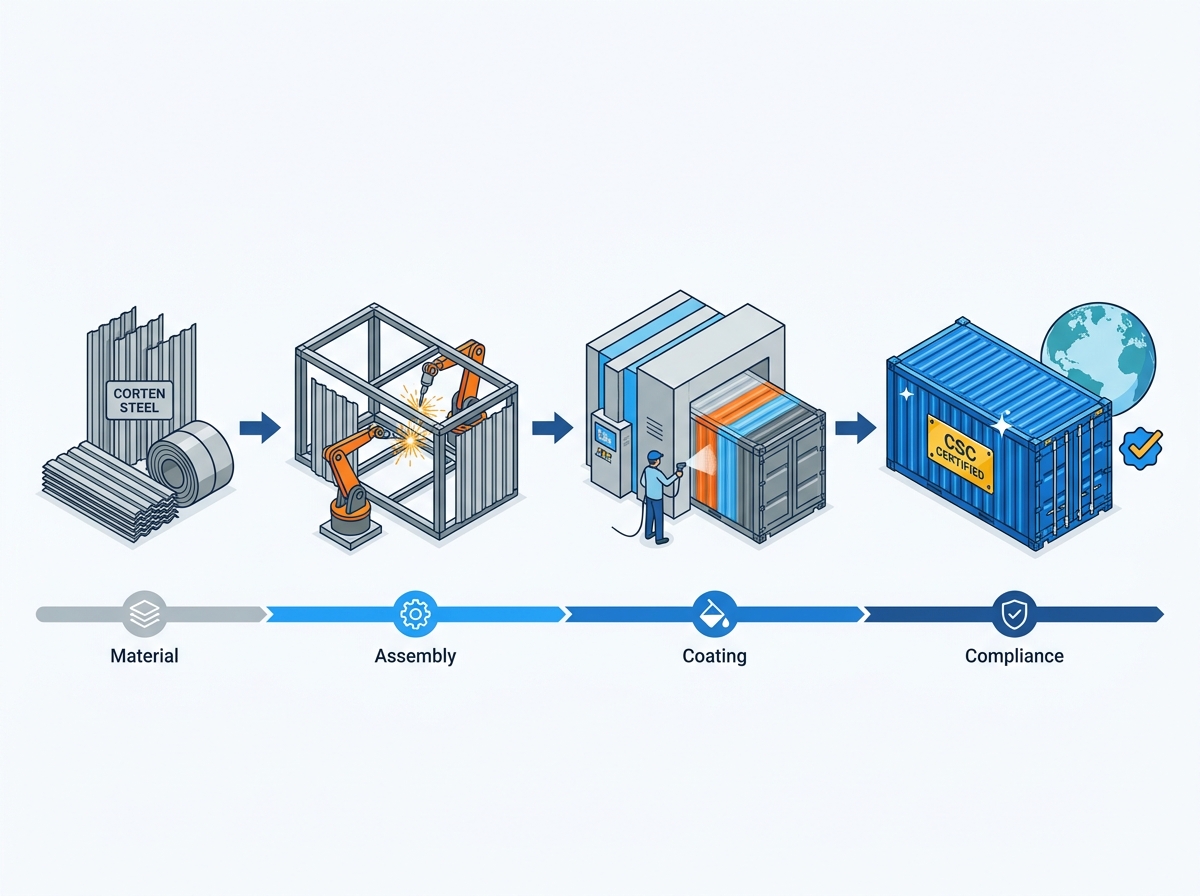
Even Corten steel needs specialized coatings to maximize its lifespan. Paint does more than add color. It provides a highly engineered chemical barrier against the elements.
Factories cannot paint bare, untreated steel. First, they must perform shot blasting. High-pressure nozzles blast tiny steel beads against the metal surfaces. This aggressive process removes factory mill scale and surface impurities. More importantly, it creates a rough bonding profile. Paint needs this microscopic texture to adhere permanently to the steel.
Marine environments destroy standard commercial paints. Factories apply a rigorous three-tier paint system to protect the asset.
Zinc-rich primer: This base layer provides powerful rust inhibition. The zinc acts as a sacrificial anode. It oxidizes before the steel does.
Epoxy mid-coat: This thick layer provides physical durability. It resists scratching, chipping, and mechanical impacts during transit.
Polyurethane top-coat: The final layer offers extreme UV resistance. It seals the box against water and prevents the vibrant colors from fading under direct sunlight.
Smart buyers verify the exact micron thickness of the paint application. You must request this data from your manufacturer. A thin paint job leads to early corrosion. Precise micron thickness directly impacts the manufacturer warranty. It ultimately determines the lifespan of the box in harsh marine environments.
An ocean freight box is part of a massive global logistics network. It must interact seamlessly with cranes, trucks, and cargo ships worldwide.
The International Organization for Standardization (ISO) sets strict dimensional rules. Factories must build each unit with millimeter-perfect precision. Automated port handling equipment relies entirely on exact dimensions to grab the corner castings. Furthermore, ships stack these units up to eight boxes high. Even a slight dimensional variance would cause a massive tower to collapse under its own weight.
Every newly manufactured box receives a CSC plate. This stands for the Convention for Safe Containers. Think of this small brass plate as a global passport. It holds vital data. It lists the manufacturer, the exact production date, and the maximum weight capacities. A unit without a valid CSC plate is legally useless for international freight. Ports will simply refuse to load it.
Factories do not simply guess if a box is ready. They conduct brutal factory testing protocols before granting certification. Workers perform light-leak testing by stepping inside, closing the doors, and looking for any piercing sunlight. They also conduct severe hydraulic load testing on the corners. Massive presses simulate the crushing weight of seven fully loaded units sitting on top of the tested box.
Understanding production cycles helps you plan your logistics accurately. You must differentiate between physical assembly time and actual delivery timelines.
The actual time to build a single unit is surprisingly brief. An efficient assembly line can weld, paint, and floor a box in just a few hours. However, realistic factory lead times for bulk orders stretch much longer. Expect to wait anywhere from several weeks to several months.
Several global variables affect your procurement timeline. Raw material shortages often pause assembly lines. Global shipping seasonality creates massive demand spikes right before major holidays. Additionally, requesting custom factory paint or structural modifications adds mandatory curing and engineering time.
You must proactively align your procurement schedules with factory production cycles. Plan your purchases months in advance. Rushing an order forces you to pay steep premium fees. Alternatively, poor planning forces you to rely on secondary markets. These markets often carry older, heavily used inventory.
Not all manufacturing facilities uphold the same ethical or structural standards. You need clear metrics to evaluate potential partners.
Walk away if a supplier refuses to provide detailed material specs. Treat unusually short warranties on paint or structural integrity as a major warning sign. A severe lack of ISO or CSC auditing transparency means they likely cut dangerous corners during assembly.
Trust suppliers who provide clear documentation of their paint micron thickness. Look for verifiable third-party quality control (QC) audits conducted during live production. Reliable manufacturers also demonstrate transparent sourcing of their bamboo or plywood flooring materials.
Use this simple checklist when interviewing container manufacturers or wholesale brokers:
Request the official chemical composition sheet for the steel grade used in the corner castings and corrugated panels.
Demand written confirmation of the three-tier paint system, specifically noting the expected micron thickness.
Verify their third-party auditing partner responsible for issuing the final CSC safety plates.
Taking these steps ensures you only partner with legitimate, high-tier factories.
The manufacturing process determines the entire fate of your asset. The difference between a short-lived 5-year box and a robust 20-year asset lies entirely in the factory details. It depends on manufacturing tolerances, the exact steel grade used, and the chemical composition of the paint application.
We encourage all buyers to prioritize strict maritime compliance and material transparency over the lowest baseline price. A cheap box quickly becomes an expensive liability when rust sets in or ports reject it.
Take action today to secure your fleet. Request a detailed quote from your supplier. Ask them to provide a sample CSC plate. Reach out and discuss your specific shipping container requirements with a qualified sales team to guarantee you receive exactly what your project demands.
A: The actual assembly line production time takes only 4 to 6 hours per unit. However, total order fulfillment time usually ranges from 6 to 12 weeks. This delay accounts for raw material sourcing, factory backlog, custom paint curing, and scheduling the final third-party maritime inspections.
A: Yes. When placing a factory-direct bulk order, you can easily specify custom RAL colors. The factory applies your exact color during the polyurethane top-coat phase. This yields superior durability compared to aftermarket painting, as the paint bonds directly to the fresh factory primer.
A: Historically, factories used toxic pesticides to pass strict Australian timber quarantine laws. Today, modern manufacturers use safe treatments like basileum or tailileum. These protect the bamboo or plywood from insects and rot without exposing buyers or conversion builders to dangerous off-gassing.
A: They are virtually identical. Almost all "new" containers are classified as "one-trip." Factories build them overseas. To avoid the massive expense of shipping empty boxes, logistics companies fill them with cargo for a single voyage to your domestic market before selling them to you.


